


Can Heirs Consign Guns Legally? | Inherited Firearms Guide

Updated: Jul 21
Published by the Gun Auctions USA Team | Reviewed and Verified for FFL Regulatory Compliance by FFL Owner / Auctioneer: Star Drouse

A family opens a safe after a death and finds a dozen rifles, a few handguns, old ammo, and no clear records. That is usually when the real question hits—can heirs consign guns legally? In many cases, yes. But the answer depends on who legally controls the estate, what type of firearms are involved, where the guns are located, and how the transfer is handled.
This is where people get into trouble. They assume inherited firearms can be treated like furniture, tools, or jewelry. They cannot. Firearms move under a different legal framework, and if an heir, executor, or trustee starts selling too quickly without understanding possession and transfer rules, a simple estate sale can become a compliance problem.
Can Heirs Consign Guns Legally in Florida?
In Florida, heirs can often consign firearms legally, but the key issue is authority. The person bringing guns to auction or consignment has to have the legal right to do so. Sometimes that is the named heir. Sometimes it is the personal representative of the estate. Sometimes it is a trustee. Those are not interchangeable roles, and that distinction matters.
If probate is open, the executor or personal representative may be the party with authority to act on behalf of the estate. If the firearms already passed directly to a lawful heir outside formal administration, that heir may be able to consign them. If the collection is held in a trust, the trustee may control the disposition. The legal owner, or the person authorized to act for the owner, needs to be clear before anything is listed for sale.
The other major issue is whether the firearms themselves are lawful to possess and transfer. Most ordinary modern firearms and many older collectible guns can be sold through a compliant auction process. But short-barreled rifles, suppressors, machine guns, or other NFA-regulated items require a different level of review and paperwork. If those items are present, nobody should guess.
The biggest mistake heirs make
The most common mistake is trying to do a quick private sale before verifying authority, value, and transfer requirements. That usually happens because the family wants the house cleared out, or because someone assumes a local buyer offering cash is the fastest solution.
Fast is not always safe, and it is rarely where the strongest prices come from. A private sale may expose the seller to questions about who had the right to sell, whether the buyer was legally qualified, and whether proper transfer procedures were followed. It also tends to produce weak pricing, especially when the heir does not know whether the collection contains common hunting guns, premium collector pieces, or highly desirable older revolvers and military firearms.
A professional firearm auction process solves more than one problem at once. It helps establish inventory, separates ordinary pieces from premium lots, markets them to real bidders, and routes modern firearms through lawful transfer procedures. That is exactly why estate consignments should be handled by a company built for firearms, not by a general estate liquidator.
Who can legally consign inherited guns?
The answer depends on the estate structure.
If there is a will and probate is active, the personal representative often has the authority to marshal and sell estate property. If the firearms have already been distributed to a beneficiary, that beneficiary may be the one who consigns them. If there is a trust, the trustee may hold the power to sell. If there are multiple heirs, one family member should not act alone unless that authority is documented.
That last point matters more than people expect. Inherited collections often create family disputes after the fact. One sibling says the guns were promised to him. Another says they were estate assets to be sold and divided. Good consignment handling starts by confirming who has legal control and whether anyone else needs to sign off.
That is not legal advice. It is practical reality. The cleaner the paperwork on the front end, the smoother the sale on the back end.
What firearms can create extra legal issues?
Not every inherited gun is treated the same way. Ordinary long guns and handguns are usually straightforward when handled through a licensed, compliant process. But several categories can complicate a consignment.
NFA firearms are the first category to flag immediately. Machine guns, suppressors, short-barreled rifles, short-barreled shotguns, and certain other regulated items may require federal registration records and specific transfer procedures. If an heir finds one of these in a collection and does not know its status, the right move is to stop and verify before transporting or marketing it.
The second category is firearms with uncertain provenance or altered markings. A gun with a missing serial number, signs of unlawful modification, or questionable origin needs close review. Selling first and asking questions later is a bad strategy.
The third category is ammunition and accessories stored with the guns. While they may be sellable, they need separate handling, cataloging, storage, and in some cases shipping coordination. Estate collections are often mixed, and proper liquidation means sorting the inventory the right way instead of treating everything as one bulk lot.
Why consignment is often the safest option for heirs
When heirs ask can heirs consign firearms legally, they are usually asking two questions at once. First, are we allowed to sell these? Second, how do we sell them without creating legal risk or leaving money on the table?
Consignment through a specialized firearm auction company is often the best answer because it combines market exposure with regulated transfer handling. Instead of trying to photograph every gun, research model numbers, write descriptions, field buyer questions, collect funds, and sort out legal transfers, the heir hands the process to a team that does this every auction cycle.
That matters because inherited collections are rarely simple. Some include common hunting guns that sell on utility and condition. Others include pre-64 Winchesters, Colt revolvers, older Smith & Wesson handguns, military surplus rifles, commemoratives, optics, and large ammo quantities. The spread in value can be dramatic. A poor local offer may sound convenient, but convenience gets expensive when desirable lots are undervalued.
A serious firearm auction company can identify what should be sold individually, what should be grouped, and what deserves premium presentation. Better photography, stronger descriptions, broader bidder reach, and real competition generally produce stronger results than a fast local liquidation.
What the consignment process should look like
A proper firearm estate consignment starts with intake and authority review. The seller should be prepared to show identification and documents that establish the right to consign. From there, the collection should be inventoried and evaluated. That means model verification, condition review, caliber identification, serial number recording where appropriate, and separation of modern firearms, antiques, accessories, and ammunition.
Next comes valuation and marketing strategy. Some guns belong in featured lots. Others sell best as grouped estate lots. A serious auction house does not just post inventory and hope. It builds a catalog, photographs at scale, writes listings that attract informed bidders, and pushes those listings to broad audiences.
Then comes the compliance piece that heirs usually want off their shoulders. Modern firearms must go through lawful transfer procedures to the buyer. Payment collection, buyer qualification, and shipping coordination all need to be managed correctly. This is where full-service firearm consignment stands apart from informal selling.
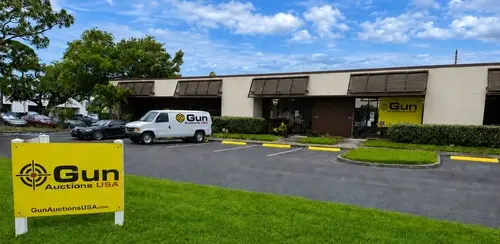
For Florida families, that full-service model is often the difference between a stressful estate chore and an organized liquidation. Gun Auctions USA is built around exactly this kind of work, including inherited collections that need market exposure, legal discipline, and hands-on operational support.
GUN AUCTIONS USA
10550 72nd St. STE 505
Largo, FL 33777
Call 888-659-9909 with any questions you may have:
When the answer is not a simple yes
There are situations where heirs should pause before consigning. If probate authority is unclear, stop and clarify it. If multiple heirs dispute ownership, resolve that first. If prohibited persons may have access to the firearms, secure the collection immediately. If NFA items are involved, verify their status before moving anything.
There is also the practical question of timing. Sometimes a family wants immediate removal from a property. Sometimes they need formal inventory for estate accounting before the sale. Sometimes they want a partial liquidation while retaining a few sentimental firearms. A good auction partner can work within those realities, but only if the facts are clear from the beginning.
The right approach is not panic, and it is not delay for delay's sake. It is controlled action with the right documentation and the right sales channel.
The real question heirs should ask
The better question is not only can heirs consign firearms legally. It is whether they are doing it in the way that protects the estate and maximizes value.
A lawful sale that produces weak prices is still a bad outcome. A strong price achieved through a sloppy process is worse. Heirs need both: legal handling and competitive results. That means confirming authority, identifying what is in the collection, using a sales platform with real bidder reach, and making sure transfers are processed correctly.
Inherited firearms carry legal, financial, and emotional weight all at once. The families who handle them best are not the ones who move fastest. They are the ones who use a process strong enough to hold up under scrutiny and smart enough to capture what the collection is actually worth.
If you are staring at a gun safe, a closet, or an entire estate room full of firearms and wondering where to begin, the smartest first move is to treat the collection like an asset class, not leftover property. That one decision tends to change everything.
Bid with absolute confidence. Gun Auctions USA / GAU Firearms LLC is a fully regulated FFL dealer processing thousands of firearms through HiBid, Proxibid, and LiveAuctioneers with a verified 5-star reputation. Click here to read our client reviews on Google.


Comments