


How the Gun Auction Consignment Process Works

Updated: Jul 21
Published by the Gun Auctions USA Team | Reviewed and Verified for FFL Regulatory Compliance by FFL Owner / Auctioneer: Star Drouse
A gun collection can look straightforward until it is time to sell it. Then the real questions start. What is it worth, who can legally buy it, how do transfers work, and how do you avoid leaving money on the table? That is exactly why understanding the gun auction consignment process matters. A professionally managed auction is not just a place to list guns. It is a controlled system for valuation, exposure, legal compliance, and competitive bidding.
For individual sellers, collectors, heirs, and estate representatives, the biggest mistake is treating firearms like ordinary household property. They are not. Some pieces have collector premiums. Some are common shooters with broad demand. Some require modern transfer procedures and background checks, while antiques may follow different rules. Ammunition and accessories add another layer. A true consignment auction process is built to sort all of that out before the first bid is placed.
What the Gun Auction Consignment Process Is Designed to Do
At its best, the firearm auction consignment process solves three problems at once. It establishes realistic market value, puts the inventory in front of serious buyers, and manages the legal steps required to complete the sale properly.
That combination is what separates a specialized firearm auction company from a pawn shop counteroffer or a private sale that turns into a paperwork headache. Most sellers do not need another guess about price. They need a disciplined selling channel that attracts competing bidders and handles the transaction from intake to payout.
For estates, this matters even more. Families are often dealing with inherited firearms they did not purchase, do not fully understand, and do not want to mishandle. The right process reduces risk and removes uncertainty while still pursuing strong realized prices.
Step 1: Intake and initial review
The process starts with a review of what you have. Sometimes that is a single collector firearm. Sometimes it is an entire estate with rifles, shotguns, handguns, ammunition, optics, magazines, holsters, and militaria. The first job is identifying the scope of the consignment and deciding what can and should go to auction.
This stage is practical, not glamorous. Serial numbers, makers, models, calibers, overall condition, modifications, and included accessories all matter. If there is provenance, original boxes, paperwork, or a known collection history, that can help too. For inherited collections, sellers often do not have every detail, and that is common. A professional team should be prepared to organize incomplete information and build the file correctly.
Not every item performs the same way at auction. A rare Colt, Winchester, or military firearm may draw aggressive national bidding. A common modern handgun may still sell well, but the pricing strategy will be different. Mixed accessory lots, surplus ammunition, and hunting guns may be grouped in ways that increase efficiency and bidder interest.
Step 2: Research and valuation
This is where experience protects the seller. Real firearm valuation is not based on wishful thinking, old stories, or the highest asking price someone saw online. It is based on comparable sales, condition grading, brand demand, collector behavior, and current auction momentum.
A strong consignment company researches recent market activity and uses that information to position each lot. Sometimes the goal is to let active bidder competition find the ceiling. Sometimes it makes sense to structure lots in a way that prevents undervaluing lower-demand inventory. That is especially important in estates where there may be both premium pieces and very ordinary guns in the same collection.
This is also where a seller starts to see the advantage of a specialist. General auction houses can miss key details that affect value. A firearms-focused team is more likely to recognize matching numbers, uncommon variants, import marks, finish issues, period-correct accessories, and legal distinctions that influence bidding confidence.
Step 3: Cataloging and photography
Good auctions do not happen by accident. They are built lot by lot. Once inventory is accepted for consignment, each item needs a clear description and professional images that answer buyer questions before they are asked.
Catalog descriptions should be accurate, compliant, and specific. Buyers want to know make, model, caliber, action type, barrel length, serial number format where appropriate, visible condition, included magazines or accessories, and whether the firearm qualifies for standard transfer requirements. Vague listings cost money because they reduce bidder confidence.
Photography matters just as much. Firearms buyers are detail buyers. They want to see markings, stocks, bores when possible, grips, sights, finish wear, engraving, proof marks, optics, and any obvious defects. Strong photos increase engagement, improve absentee bidding, and support stronger final prices. Weak photos do the opposite.
Step 4: Marketing and bidder exposure
This is where many sellers underestimate the gap between listing an item and running an auction that actually performs. Exposure drives competition, and competition drives pricing.
A serious firearm auction company does not rely on one local room or one website and hope for the best. It markets aggressively to qualified buyers and collectors across multiple channels. The broader and more targeted the bidder pool, the better the odds of reaching true market value.
That is a major reason consignors choose a specialist with a nationwide reach. A local buyer base may be fine for common inventory, but rare or desirable firearms often need national attention. Gun Auctions USA addresses that with its Triple Auction System, placing inventory across HiBid, Proxibid, and LiveAuctioneers to maximize bidder visibility and create more pressure at the hammer. For sellers who want more than a quick local offer, that difference is substantial.
Step 5: The auction itself
When the sale opens, all the preparation starts doing its work. Competitive bidding is the mechanism that can push prices past what a fixed offer buyer would ever pay. That does not mean every lot will exceed expectation. It depends on rarity, timing, condition, platform traction, and bidder demand. But a well-run auction gives the market a chance to perform.
This is also why scheduled, professionally promoted auctions tend to outperform ad hoc selling. Buyers show up when they expect quality inventory, complete listings, and a compliant transfer process. Confidence creates participation. Participation creates bidding depth.
For larger estates and collections, auction timing can be strategic. Sometimes selling everything in one event is efficient. Other times it makes sense to stage groups of lots across multiple sales. The right approach depends on volume, category mix, and whether the collection contains standout pieces that deserve more focused attention.
Step 6: Legal transfer and compliance handling
This is the part sellers should never treat casually. The firearm auction consignment process is not complete when the hammer falls. Modern firearms still require lawful transfer procedures, and that means qualified handling by a properly structured operation.
A professional auction company coordinates the post-sale transfer process, including buyer qualification, background check requirements where applicable, record-keeping, and shipping arrangements when permitted. That protects the seller and protects the transaction.
This is especially valuable for families and executors. They often do not want to interpret transfer rules, screen buyers, package firearms, or deal with interstate compliance questions. They want the sale completed correctly. That is not a side benefit. It is a core reason to consign with a specialist in the first place.
Step 7: Payment, settlement, and final reporting
Once the buyer pays and the transfer requirements are satisfied, the consignor receives settlement according to the auction company’s terms. At this point, professionalism still matters. Sellers should expect clear accounting that shows what sold, what it brought, and what net proceeds were generated after the agreed commission structure.
For estates and trusts, reporting can be particularly important. Executors and fiduciaries may need documentation for internal records, distribution planning, or communication with family members. A clean paper trail helps keep the process defensible and organized.
Where sellers gain the most value
The strongest consignment results usually come from a full-service approach, not a stripped-down listing service. Research affects price strategy. Cataloging affects bidder confidence. Photography affects engagement. Marketing affects turnout. Compliance affects whether the transaction closes cleanly. Every stage has a direct impact on the final outcome.
That is why the lowest-friction option is not always the best financial option. A pawn shop offer is fast, but speed often comes at the seller’s expense. A private sale may look simple until legal questions, no-shows, pricing errors, or safety concerns appear. Auction consignment asks for a little more process up front, but it is built to create a better result.
If you are selling one firearm, a lifetime collection, or an inherited estate, the right process should do more than move inventory. It should protect value, protect compliance, and remove burden. That is what a professional firearm auction consignment process is supposed to deliver, and when it is handled correctly, it gives sellers something every market promises but few actually provide - confidence backed by results.
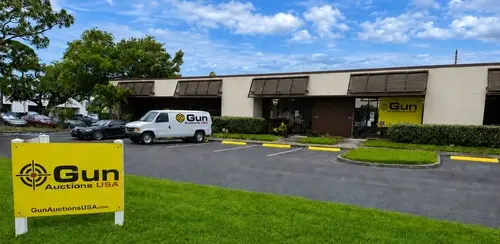
GUN AUCTIONS USA
10550 72nd St. STE 505
Largo, FL 33777
Call 888-659-9909 with any questions you may have:
Bid with absolute confidence. Gun Auctions USA / GAU Firearms LLC is a fully regulated FFL dealer processing thousands of firearms through HiBid, Proxibid, and LiveAuctioneers with a verified 5-star reputation. Click here to read our client reviews on LiveAuctioneers.


Comments