


Interstate
Gun Sales, Transfers & Shipping
Plain-English guidance for Florida gun owners, sellers, buyers, families, and heirs dealing with interstate firearm transactions.
Federal law generally restricts direct firearm transfers between unlicensed residents of different states. This guide explains when an FFL is required, where the firearm should be transferred, and how shipping fits into the process.
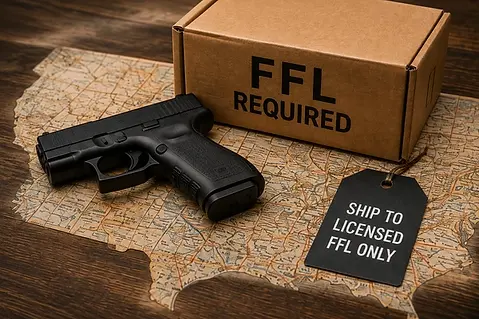
Can I Sell a Gun to Someone in Another State?
Generally, an unlicensed Florida resident cannot directly transfer a firearm to an unlicensed resident of another state. In an ordinary interstate sale, the firearm should be transferred through an FFL in the buyer’s state of residence.
The Buyer Usually Receives the Firearm Through an FFL
The Florida seller can arrange for the firearm to be sent to a licensed dealer in the buyer’s state. The buyer then completes the dealer’s required transfer process before taking possession.
The Receiving FFL Handles the Buyer Transfer
The receiving dealer is responsible for the federal transfer paperwork and required background-check process before delivering the firearm to the buyer. For more on dealer checks, see Florida Gun Transfer Background Checks.
Do Not Hand the Firearm Directly to an Out-of-State Buyer
Meeting an out-of-state buyer in person does not eliminate the interstate-transfer rules. The buyer’s residency matters, not merely where the two parties happen to meet.
When Is an FFL Required for an Interstate Transfer?
The safest way to understand the rule is to separate same-state private transfers from transfers between residents of different states. Federal law places additional restrictions on the second category.
Selling to an Out-of-State Resident
An ordinary sale by an unlicensed seller to a resident of another state generally requires the firearm to go through a licensed dealer rather than directly to the buyer.
Gifting a Firearm to Someone in Another State
A gift does not automatically avoid the interstate rules. A transfer to an unlicensed resident of another state is generally treated as an interstate transfer even when no money changes hands.
Online and Auction Sales
A firearm sold online or at auction to an out-of-state buyer is generally delivered through the buyer’s receiving FFL rather than shipped directly to the buyer.
Transfers Between Licensed Dealers
FFL-to-FFL shipments follow dealer recordkeeping and transfer requirements and are distinct from a private seller delivering directly to the end purchaser.

How Do You Ship a Firearm to an FFL?
Federal law permits a nonlicensee to ship a firearm to a licensed dealer in another state, but the receiving FFL should be contacted first because dealer policies and carrier requirements can be more restrictive than federal law. ATF specifically states that a nonlicensee may ship a firearm to a licensee in any state. For the broader estate rules, see the Florida Inherited Gun Laws & Estate Guide.
Contact the Receiving FFL Before Shipping
Confirm that the dealer will accept the firearm, ask what identification or documentation they require from the sender, and obtain their shipping instructions before sending anything.
Verify the FFL and Shipping Address
The firearm should be sent to the address and under the procedures provided by the receiving dealer. Do not assume that every dealer accepts shipments from private individuals.
Follow the Carrier’s Current Rules
Carrier policies can change and may impose restrictions beyond federal law. Always review the current rules of the carrier you intend to use before shipping.
USPS Rules Differ by Firearm Type and Sender
USPS rules are specific about who may mail certain firearms. Current Postal Service regulations permit qualifying unloaded rifles and shotguns to be mailed when the applicable requirements are satisfied.
What Happens After the Firearm Reaches the Receiving FFL?
Shipping the firearm to the dealer does not itself complete the transfer to the buyer. The receiving FFL must complete the applicable dealer-transfer process before the buyer may take possession.
Buyer Identification
The buyer must establish identity and residency as required by the receiving dealer and applicable law.
ATF Form 4473
For a dealer transfer to an unlicensed buyer, the receiving FFL generally completes the required ATF Form 4473 process with the buyer.
Background Check
The receiving FFL handles the applicable federal or state point-of-contact background-check process before transfer.
Buyer’s State Law Also Applies
The buyer must be eligible to receive and possess the firearm under the laws applicable in the buyer’s state. State law can impose additional restrictions beyond federal law.
Are Handguns and Long Guns Treated Differently?
Handguns
Handguns generally must be transferred to an out-of-state buyer through an FFL in the buyer’s state of residence. A Florida seller should not directly deliver or ship a handgun to an unlicensed buyer who lives in another state. The receiving FFL completes the required Form 4473 and background-check process before the buyer takes possession.
Rifles and Shotguns
Rifles and shotguns are subject to a limited federal exception for certain dealer sales to nonresidents. A licensed dealer may transfer a qualifying rifle or shotgun to an out-of-state resident if the transaction complies with federal law and the laws of both the dealer’s state and the buyer’s state. This does not allow an unlicensed private seller to directly transfer a rifle or shotgun to an unlicensed resident of another state.
Do Not Rely on Firearm Type Alone
Whether a transaction is lawful depends on the identities and residences of the parties, who is licensed, the type of transaction, the firearm involved, and applicable state law.
⚠️ Keep it Simple: For private sellers, the safest general rule is simple: if the buyer lives in another state, arrange the transfer through an appropriate FFL rather than handing or shipping the firearm directly to the buyer.
What if the Firearm Is Being Inherited Across State Lines?
A lawful inheritance can be treated differently from an ordinary interstate sale or gift. Federal regulations contain an exception for firearms acquired by bequest or intestate succession.
A Lawful Bequest Is Different From a Sale
A person who lawfully acquires a firearm through a bequest or intestate succession may fall within the federal inheritance exception, even when the firearm is located in another state.
The Heir Must Still Be Eligible
The inheritance exception does not allow a prohibited person to possess a firearm. The heir must still be legally permitted to acquire or possess the firearm under the law of the heir’s state.
A Later Sale Is a New Transaction
If the heir later sells the inherited firearm to someone in another state, that later sale is generally subject to the normal interstate-transfer rules.
What Records Should the Seller Keep?
Keeping a clear transaction record can help document where the firearm went and which dealer received it.
Firearm Information
Record the make, model, caliber or gauge, firearm type, and serial number.
Receiving FFL Information
Keep the receiving dealer’s business name, license information or verification record, shipping address, and contact information.
Shipping Documentation
Retain the carrier receipt, tracking information, delivery confirmation, and any correspondence from the receiving FFL.
Sale or Consignment Documentation
Keep the optional Bill of Sale, invoice, auction documentation, or other records associated with the transaction.
Common Interstate Transfer Mistakes
Shipping Directly to the Buyer
Do not ship a firearm directly to an unlicensed out-of-state buyer when federal law requires the transfer to occur through an FFL.
Assuming a Gift Is Exempt
Calling the transaction a gift does not generally eliminate interstate-transfer requirements.
Shipping Before the FFL Agrees to Receive It
Receiving dealers have their own policies. Confirm acceptance before shipment.
Ignoring the Buyer’s State Laws
A transaction that is lawful in Florida may still be restricted in the recipient’s state.
Confusing Inheritance With an Ordinary Transfer
The federal inheritance exception is specific to qualifying bequests and intestate succession. It does not create a broad exception for family gifts or later sales.
Frequently Asked Questions
Can I sell a gun to someone who lives in another state?
Yes, but an ordinary sale by an unlicensed person generally cannot be completed by directly handing or shipping the firearm to an unlicensed out-of-state buyer. The usual process is to send the firearm to an FFL in the buyer’s state, where the buyer completes the required dealer transfer.
Can I ship a firearm directly to an FFL in another state?
Generally, yes. ATF states that a nonlicensee may ship a firearm to a licensed dealer in any state. Contact the receiving FFL first because the dealer may have its own requirements for shipments from private individuals.
Can I ship a gun directly to an out-of-state buyer?
Generally not when the recipient is an unlicensed resident of another state. Ordinary interstate transfers between unlicensed individuals generally must go through the appropriate FFL transfer process.
Does an out-of-state buyer have the background check in Florida?
Usually not when the firearm is being transferred through an FFL in the buyer’s state. The receiving dealer completes the applicable transfer paperwork and background-check process before delivering the firearm to the buyer. See Florida Gun Transfer Background Checks for the dealer-transfer process.
Can I give a firearm to a family member who lives in another state?
Family relationship alone does not generally eliminate the federal interstate-transfer restrictions. A gift to an out-of-state family member normally follows the applicable interstate transfer rules unless a specific legal exception applies.
Can an out-of-state heir inherit a gun without using an FFL?
Federal regulations provide an exception for qualifying firearms acquired by lawful bequest or intestate succession. This is different from a gift or ordinary sale, and the heir must still be legally permitted to possess the firearm in the heir’s state. See the Florida Inherited Gun Laws & Estate Guide for estate-specific rules.
Can I mail a firearm through USPS?
USPS rules depend on the firearm and the status of the sender and recipient. Unloaded rifles and shotguns may be mailable in qualifying circumstances, while other firearms are subject to different restrictions. Check current USPS Publication 52 before mailing.
Should I contact the receiving FFL before shipping?
Yes. Confirm that the dealer will accept the firearm, whether they accept shipments from nonlicensees, what identification they require, and the correct shipping address before sending the firearm.
⚠️ IMPORTANT: This page and downloadable form are provided for general informational and recordkeeping purposes only and are not legal advice. Firearm laws can change, and additional federal, state, or local requirements may apply to a particular transaction.